
Explore the project
ARCHIVED EDITION · TAP-FIG-0001 · v2.1 · EnglishTAP Record & current edition ↗

Human Adaptation Map

Demands, predictive regulation and function over time, connected by feedback, with current state and reserve represented as possible contributors.

Updated 2026-09-16 · Archived

Reuse ↗
THE ALLOSTASIS PROJECT

Cite this work

TAP publication · cite this edition for our explanation.

Publication record
Work identifier
TAP-FIG-0001
Edition
v2.1 · English
Updated
2026-09-16
Archived

TAP Record ↗ · Read this edition ↗

Available editions: v2.1v2.0v1.1v1.0

The figure and framework are separate works with independent version histories. This relationship identifies the specific editions used together.

This is the text and publication record captured for this edition. Later corrections appear in subsequent editions. Website design and interactive software are not archived here.
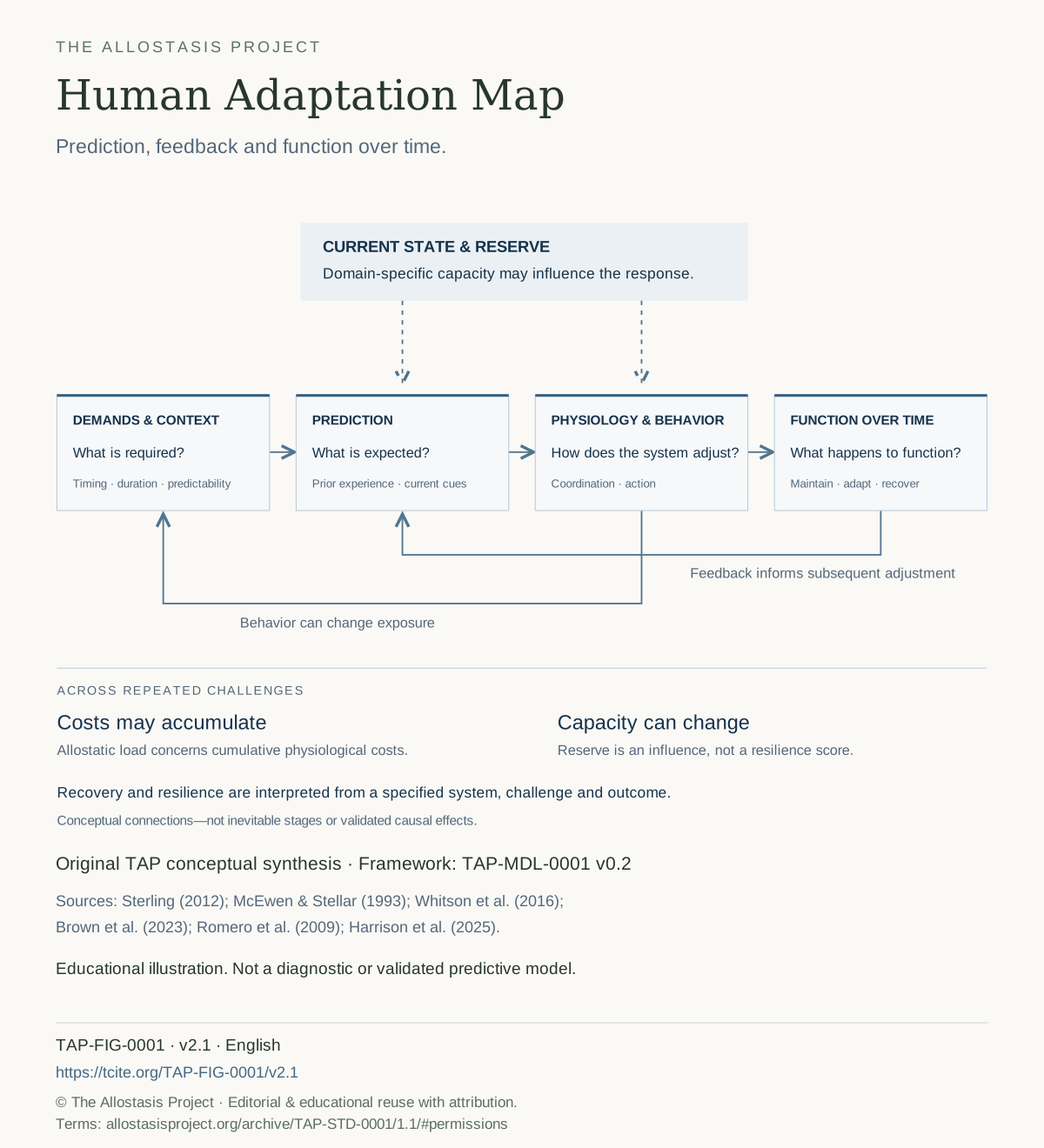
Demands, predictive regulation and function over time, connected by feedback, with current state and reserve represented as possible contributors.
Download figureSVG ↧PNG ↧Permission policy ↗© The Allostasis Project. Reuse with attribution is permitted in editorial reporting, teaching and noncommercial presentations under the TAP permission. Advertising, product marketing, paid asset resale and adaptations require separate permission. Legal exceptions remain unaffected.

Reading the map

Prediction connects current cues and prior experience to physiological and behavioral adjustment. Observed outcomes inform subsequent adjustment, while behavior can change exposure. Current state and domain-specific reserve are possible contributors to the response; reserve is not a final stage in a fixed sequence.[1][3][6]

Function is observed over a defined interval, in a specified system and challenge. Recovery and resilience are interpreted from those observations; neither is a universally favorable curve shape. Across challenges, cumulative costs and capacity may change. All demands do not cause damage, and a single slow-decaying signal does not measure allostatic load.[2][4][5]

Scope & attribution

This original TAP educational synthesis is the overview figure for TAP Human Adaptation Framework (TAP-MDL-0001 v0.2). The arrows express conceptual connections, not inevitable stages, quantified effects or validated causal pathways. It is not a diagnostic model or personal score. Source theories remain attributable to their original authors; citation does not imply their endorsement.

This marked edition permits attributed reuse in editorial reporting, teaching and noncommercial presentations under the linked TAP permission. Retain the source, identifier, version and scope notes; advertising, product marketing, paid asset resale and adaptations need separate permission.

What changed in v2.1

Changed the central label to Prediction, avoiding an unsupported implication of cognitive appraisal theory. Clarified reserve as a possible contributor and recorded the specific framework edition visualized. Earlier editions remain in the archive; this revision does not indicate completed scientific review.

Figure specification

tap-adaptation-map/2.1; original conceptual synthesis; demands/context -> prediction -> physiology/behavior -> function over time; feedback from function to prediction; behavior to exposure; current state/reserve are possible contributors to regulation; cumulative costs and capacity change across challenges. Associated framework: TAP-MDL-0001 v0.2.

References

  1. Peter Sterling (2012). Allostasis: a model of predictive regulation. Physiology & Behavior. https://doi.org/10.1016/j.physbeh.2011.06.004
  2. Bruce S. McEwen, Eliot Stellar (1993). Stress and the individual. Mechanisms leading to disease. Archives of Internal Medicine. https://doi.org/10.1001/archinte.1993.00410180039004
  3. Heather E. Whitson, Wei Duan-Porter, Kenneth E. Schmader, Miriam C. Morey, Harvey J. Cohen, Cathleen S. Colón-Emeric (2016). Physical Resilience in Older Adults: Systematic Review and Development of an Emerging Construct. The Journals of Gerontology: Series A. https://doi.org/10.1093/gerona/glv202
  4. LaVerne Brown, Barbara Cohen, Rebecca Costello, Olga Brazhnik, Zorina Galis (2023). Conceptualizing a resilience research framework at The National Institutes of Health. Stress and Health. https://doi.org/10.1002/smi.3260
  5. L. Michael Romero, Molly J. Dickens, Nicole E. Cyr (2009). The Reactive Scope Model — A new model integrating homeostasis, allostasis, and stress. Hormones and Behavior. https://doi.org/10.1016/j.yhbeh.2008.12.009
  6. Laura A. Harrison, Antonio J. Gracias, Karl J. Friston, J. Galen Buckwalter (2025). Resilience phenotypes derived from an active inference account of allostasis. Frontiers in Behavioral Neuroscience. https://doi.org/10.3389/fnbeh.2025.1524722

Publication record

TAP-FIG-0001 · v2.1 · English

The Allostasis Project is founded and supported by Resilio.

© The Allostasis Project. Reuse with attribution is permitted in editorial reporting, teaching and noncommercial presentations under the TAP permission. Advertising, product marketing, paid asset resale and adaptations require separate permission. Legal exceptions remain unaffected.

Download complete edition record (JSON) ↧

Record integrity & available editions

SHA-256: cf97f608e25988e6b6e007e818bcb25dd9d50b6faa7317757751bfba6658f8fe

Captured: 2026-09-16T13:54:24.092Z

Start with a question.

Enter a keyword to search this site.

ExploreQuestions about Human AdaptationExploreMeasurement & InterpretationReading guide · Essential 5Allostatic LoadReading guide · Essential 5Recovery ScienceReading guide · Essential 5Reserve & ResilienceReading guide · Essential 5MeasurementFoundationsLoadFoundationsAllostasisFoundationsRecoveryFoundationsAllostatic LoadFoundationsPhysiological ReserveFoundationsResilienceFeaturesAllostatic Load: The Hidden Cost of AdaptationFeaturesRecovery Is Not RestFeaturesModels of Adaptation: What Different Frameworks ExplainFeaturesTAP Human Adaptation FrameworkFeaturesAre Recovery and Resilience the Same Thing?FeaturesDoes Recovery Always Mean Returning to the Same Baseline?FeaturesHow Are Physiological Reserve and Resilience Related?FeaturesWhat Can HRV Tell Us About Recovery?FeaturesWhy Feeling Better Doesn’t Always Mean Fully RecoveredMethods & projectEvidence grading & methodsMethods & projectEditorial & scientific standardsMethods & projectAbout the projectResearch · 1993Stress and the individual. Mechanisms leading to diseaseResearch · 1998Protective and damaging effects of stress mediatorsResearch · 2003The cumulative cost of additional wakefulness: dose-response effects on neurobehavioral functions and sleep physiology from chronic sleep restriction and total sleep deprivationResearch · 2006The perseverative cognition hypothesis: a review of worry, prolonged stress-related physiological activation, and healthResearch · 2007The Recovery Experience Questionnaire: development and validation of a measure for assessing recuperation and unwinding from workResearch · 2009The Reactive Scope Model — A new model integrating homeostasis, allostasis, and stressResearch · 2010Neurobehavioral dynamics following chronic sleep restriction: dose-response effects of one night for recoveryResearch · 2010Greater cardiovascular responses to laboratory mental stress are associated with poor subsequent cardiovascular risk status: a meta-analysis of prospective evidenceResearch · 2010Allostatic load biomarkers of chronic stress and impact on health and cognitionResearch · 2011Stress- and Allostasis-Induced Brain PlasticityResearch · 2012Allostasis: a model of predictive regulationResearch · 2013The LF/HF ratio does not accurately measure cardiac sympatho-vagal balanceResearch · 2013Effects of recovery sleep after one work week of mild sleep restriction on interleukin-6 and cortisol secretion and daytime sleepiness and performanceResearch · 2014Clarifying the roles of homeostasis and allostasis in physiological regulationResearch · 2014Resilience definitions, theory, and challenges: interdisciplinary perspectivesResearch · 2015Recovery from job stress: The stressor-detachment model as an integrative frameworkResearch · 2016Physiological concomitants of perseverative cognition: A systematic review and meta-analysisResearch · 2016Physical Resilience in Older Adults: Systematic Review and Development of an Emerging ConstructResearch · 2017Heart Rate Variability and Cardiac Vagal Tone in Psychophysiological Research - Recommendations for Experiment Planning, Data Analysis, and Data ReportingResearch · 2017A Meta-Analysis on Antecedents and Outcomes of Detachment from WorkResearch · 2018Recovery and Performance in Sport: Consensus StatementResearch · 2019Ad libitum Weekend Recovery Sleep Fails to Prevent Metabolic Dysregulation during a Repeating Pattern of Insufficient Sleep and Weekend Recovery SleepResearch · 2019Resilience in Clinical Care: Getting a Grip on the Recovery Potential of Older AdultsResearch · 2020Whitepaper: Defining and investigating cognitive reserve, brain reserve, and brain maintenanceResearch · 2021Leaving Work at Work: A Meta-Analysis on Employee Recovery From WorkResearch · 2022"Give me a break!" A systematic review and meta-analysis on the efficacy of micro-breaks for increasing well-being and performanceResearch · 2022Allostatic Load Measurement: A Systematic Review of Reviews, Database Inventory, and Considerations for Neighborhood ResearchResearch · 2022Allostatic Load and Mortality: A Systematic Review and Meta-AnalysisResearch · 2022Recovery from Work: Advancing the Field Toward the FutureResearch · 2023Conceptualizing a resilience research framework at The National Institutes of HealthResearch · 2023Towards a consensus definition of allostatic load: a multi-cohort, multi-system, multi-biomarker individual participant data (IPD) meta-analysisResearch · 2024Impact of baseline and longitudinal allostatic load changes on incident cardiovascular disease and all-cause mortality: A 7-year population-based cohort study in ChinaResearch · 2025Resilience phenotypes derived from an active inference account of allostasisResearch · 2026Building an ontology of resilience: Insights from the physical resilience literatureTAP Record · TAP-CON-0001LoadTAP Record · TAP-CON-0002AllostasisTAP Record · TAP-CON-0003RecoveryTAP Record · TAP-CON-0004Allostatic LoadTAP Record · TAP-CON-0005Physiological ReserveTAP Record · TAP-CON-0006ResilienceTAP Record · TAP-FTR-0001Allostatic Load: The Hidden Cost of AdaptationTAP Record · TAP-FTR-0002Recovery Is Not RestTAP Record · TAP-FTR-0008Models of Adaptation: What Different Frameworks ExplainTAP Record · TAP-MDL-0001TAP Human Adaptation FrameworkTAP Record · TAP-FTR-0006Are Recovery and Resilience the Same Thing?TAP Record · TAP-FTR-0007Does Recovery Always Mean Returning to the Same Baseline?TAP Record · TAP-FTR-0004How Are Physiological Reserve and Resilience Related?TAP Record · TAP-FTR-0005What Can HRV Tell Us About Recovery?TAP Record · TAP-FTR-0003Why Feeling Better Doesn’t Always Mean Fully RecoveredTAP Record · TAP-RDN-0001TAP reading note: Stress and the individual. Mechanisms leading to diseaseTAP Record · TAP-RDN-0002TAP reading note: Protective and damaging effects of stress mediatorsTAP Record · TAP-RDN-0003TAP reading note: The cumulative cost of additional wakefulness: dose-response effects on neurobehavioral functions and sleep physiology from chronic sleep restriction and total sleep deprivationTAP Record · TAP-RDN-0016TAP reading note: The perseverative cognition hypothesis: a review of worry, prolonged stress-related physiological activation, and healthTAP Record · TAP-RDN-0020TAP reading note: The Recovery Experience Questionnaire: development and validation of a measure for assessing recuperation and unwinding from workTAP Record · TAP-RDN-0032TAP reading note: The Reactive Scope Model — A new model integrating homeostasis, allostasis, and stressTAP Record · TAP-RDN-0024TAP reading note: Neurobehavioral dynamics following chronic sleep restriction: dose-response effects of one night for recoveryTAP Record · TAP-RDN-0004TAP reading note: Greater cardiovascular responses to laboratory mental stress are associated with poor subsequent cardiovascular risk status: a meta-analysis of prospective evidenceTAP Record · TAP-RDN-0013TAP reading note: Allostatic load biomarkers of chronic stress and impact on health and cognitionTAP Record · TAP-RDN-0005TAP reading note: Stress- and Allostasis-Induced Brain PlasticityTAP Record · TAP-RDN-0006TAP reading note: Allostasis: a model of predictive regulationTAP Record · TAP-RDN-0018TAP reading note: The LF/HF ratio does not accurately measure cardiac sympatho-vagal balanceTAP Record · TAP-RDN-0026TAP reading note: Effects of recovery sleep after one work week of mild sleep restriction on interleukin-6 and cortisol secretion and daytime sleepiness and performanceTAP Record · TAP-RDN-0012TAP reading note: Clarifying the roles of homeostasis and allostasis in physiological regulationTAP Record · TAP-RDN-0029TAP reading note: Resilience definitions, theory, and challenges: interdisciplinary perspectivesTAP Record · TAP-RDN-0007TAP reading note: Recovery from job stress: The stressor-detachment model as an integrative frameworkTAP Record · TAP-RDN-0017TAP reading note: Physiological concomitants of perseverative cognition: A systematic review and meta-analysisTAP Record · TAP-RDN-0008TAP reading note: Physical Resilience in Older Adults: Systematic Review and Development of an Emerging ConstructTAP Record · TAP-RDN-0019TAP reading note: Heart Rate Variability and Cardiac Vagal Tone in Psychophysiological Research - Recommendations for Experiment Planning, Data Analysis, and Data ReportingTAP Record · TAP-RDN-0009TAP reading note: A Meta-Analysis on Antecedents and Outcomes of Detachment from WorkTAP Record · TAP-RDN-0010TAP reading note: Recovery and Performance in Sport: Consensus StatementTAP Record · TAP-RDN-0025TAP reading note: Ad libitum Weekend Recovery Sleep Fails to Prevent Metabolic Dysregulation during a Repeating Pattern of Insufficient Sleep and Weekend Recovery SleepTAP Record · TAP-RDN-0027TAP reading note: Resilience in Clinical Care: Getting a Grip on the Recovery Potential of Older AdultsTAP Record · TAP-RDN-0028TAP reading note: Whitepaper: Defining and investigating cognitive reserve, brain reserve, and brain maintenanceTAP Record · TAP-RDN-0022TAP reading note: Leaving Work at Work: A Meta-Analysis on Employee Recovery From WorkTAP Record · TAP-RDN-0023TAP reading note: "Give me a break!" A systematic review and meta-analysis on the efficacy of micro-breaks for increasing well-being and performanceTAP Record · TAP-RDN-0011TAP reading note: Allostatic Load Measurement: A Systematic Review of Reviews, Database Inventory, and Considerations for Neighborhood ResearchTAP Record · TAP-RDN-0015TAP reading note: Allostatic Load and Mortality: A Systematic Review and Meta-AnalysisTAP Record · TAP-RDN-0021TAP reading note: Recovery from Work: Advancing the Field Toward the FutureTAP Record · TAP-RDN-0033TAP reading note: Conceptualizing a resilience research framework at The National Institutes of HealthTAP Record · TAP-RDN-0014TAP reading note: Towards a consensus definition of allostatic load: a multi-cohort, multi-system, multi-biomarker individual participant data (IPD) meta-analysisTAP Record · TAP-RDN-0031TAP reading note: Impact of baseline and longitudinal allostatic load changes on incident cardiovascular disease and all-cause mortality: A 7-year population-based cohort study in ChinaTAP Record · TAP-RDN-0034TAP reading note: Resilience phenotypes derived from an active inference account of allostasisTAP Record · TAP-RDN-0030TAP reading note: Building an ontology of resilience: Insights from the physical resilience literatureTAP Record · TAP-FIG-0001Human Adaptation MapTAP Record · TAP-FIG-0002Recovery trajectoriesTAP Record · TAP-STD-0001Citation & Reuse